
Investigating the Reaction of Rock Minerals with CO2-Water in Kuwaiti Reservoirs
Enhanced oil recovery using carbon sequestration
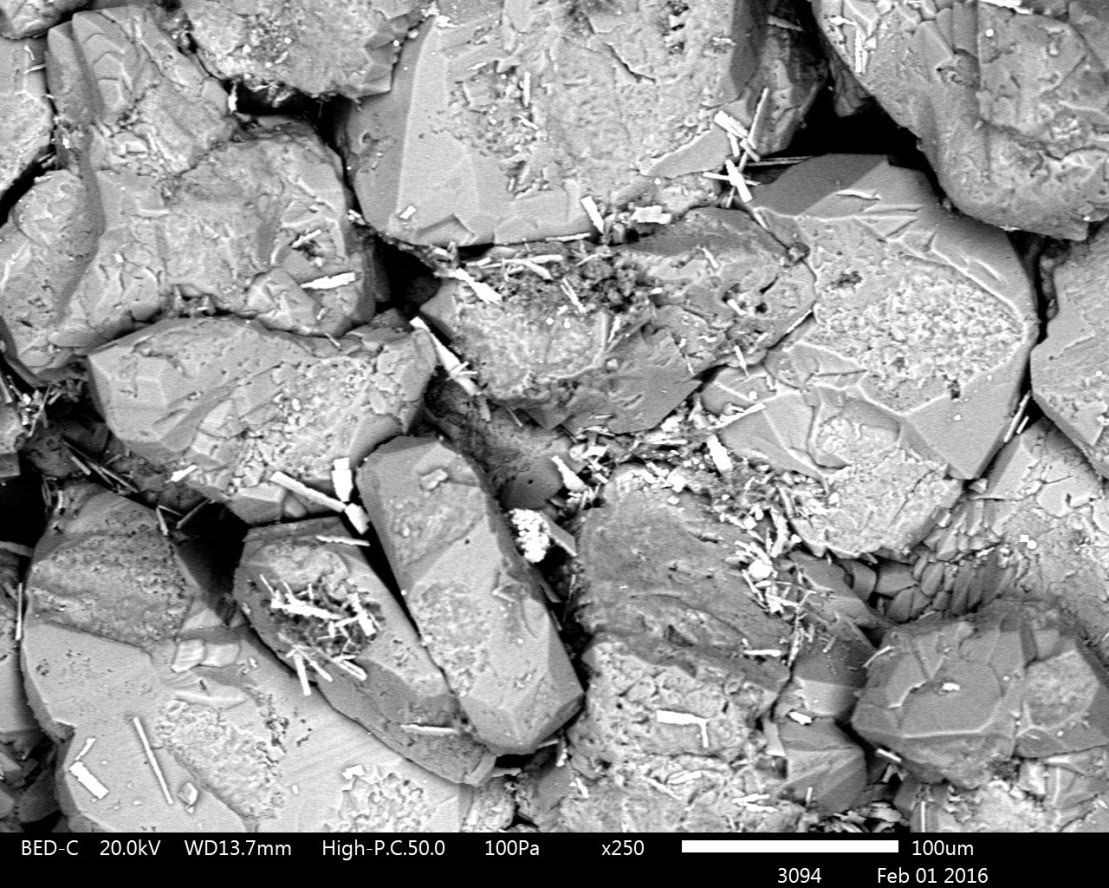
CO2 injection in oil reservoirs can enhance oil recovery and be used for CO2 storage, reducing greenhouse gas emissions into the atmosphere. The injection of a relatively reactive substance, such as CO2, into deep formations causes CO2-water-rock interactions. These reactions change the properties of a reservoir system, including surface topography, rock mineralogy, ion composition of formation water, and its porosity and permeability. This study found that mineral dissolution and precipitation occurred in both rock types (limestone and sandstone) after CO2-fluid interactions. Extensive dissolution features and the precipitation of secondary calcite was observed on the surface of limestone. Additionally, Anhydrite, calcite, and halite precipitation was detected in the sandstone. Future application of CO2 injection technology must take the observed changes into consideration to minimize formation damage.