
Assessment of the Durability and Corrosion Behavior of Concrete Treated with Chemical Inhibitors
Mitigating structural failure in reinforced steel
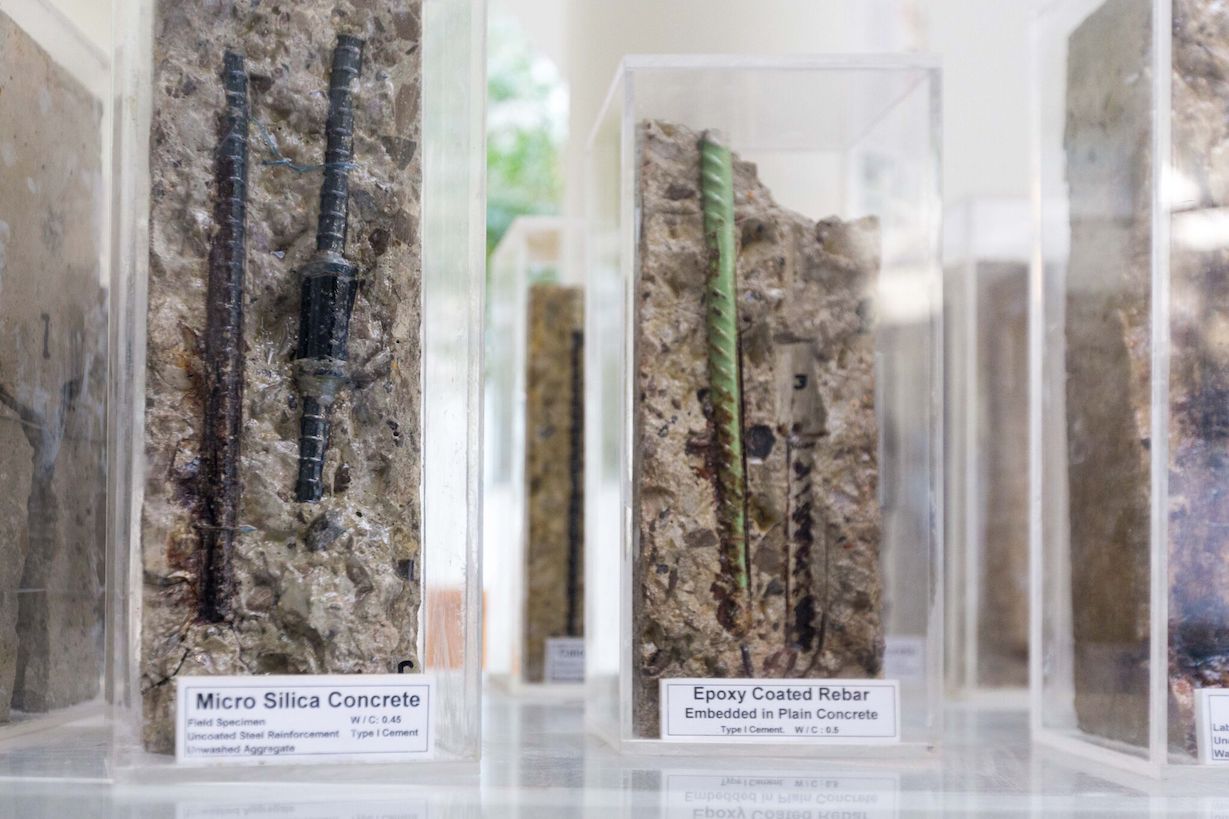
The chloride-induced corrosion of steel reinforcement and the reaction of atmospheric carbon dioxide with cement paste are the most important causes of premature failure in marine- reinforced concrete structures. Among the available methods to mitigate corrosion in steel, corrosion inhibitors offer a simple and cost-effective solution to chloride-induced corrosion. Nevertheless, the performance of commercial inhibitors is only partially satisfactory as there is no clear information available on the real efficacy of these products in an environment such as Kuwait. This study, conducted in collaboration with the Kuwait Oil Company, was initiated to evaluate the efficacy of adding two commercial chemical agents to ordinary Portland cement in order to protect steel reinforcement from corrosion. The study found that corrosion inhibitors in concrete contributed in the improvement of concrete durability and its resistance to chloride ion penetration. It also concluded that using sulfate-resistant cement only contributed slightly, and sometimes with negligible results, to the concrete’s durability when exposed to a chloride-rich environment.